
Version 8.2 released!
11 modern Grand Pianos refined with care and passion
New Classical Guitar buzz for striking realism
Participate now to the Modartt Video Contest 2023

Pianoteq
R. Schumann - Variations on the name Abegg
M. Black - Moderno Blues
A. B. Mangoré - Sueño en la floresta
B. Jurjevčič -
Jailhouse Blues
P. De Ridder - Promenade
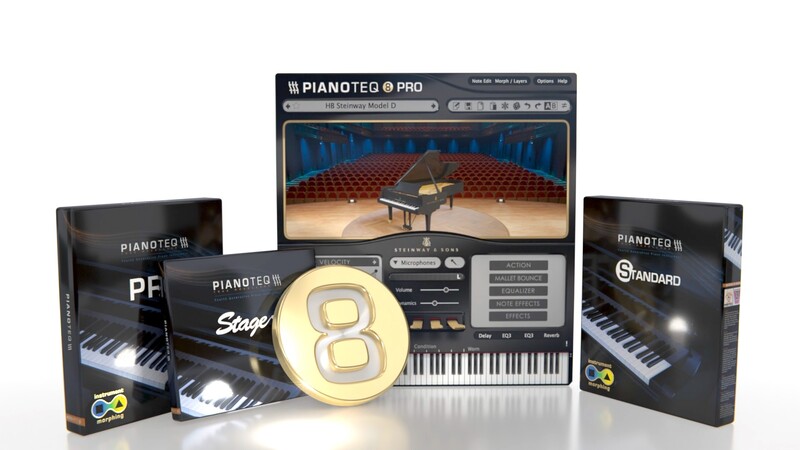
Pianoteq 8: reaching new boundaries
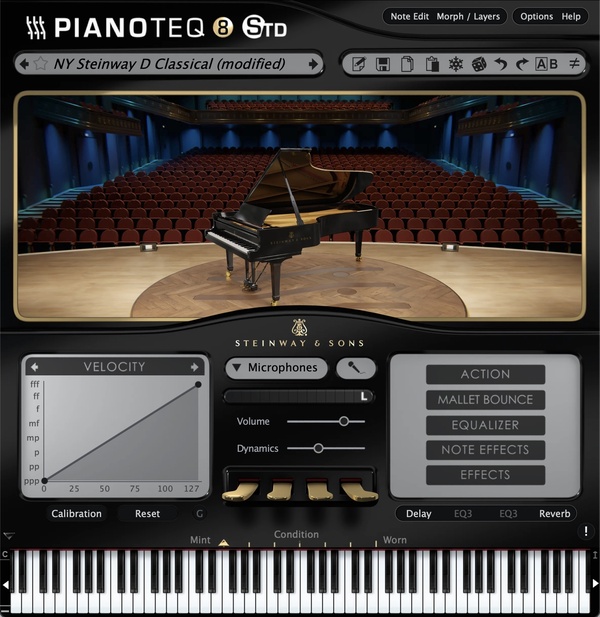
Pianoteq is an award-winning virtual instrument which you can install on your computer (PC/Mac). It is available for Windows, macOS, and Linux, and will even run on some ARM-based boards such as the Raspberry Pi. It can be used both in standalone mode and as an instrument plug-in in VST, AAX, and AudioUnits hosts.
Pianoteq offers superior playability and reproduces the complex behaviour typical of real acoustic instruments. Moreover, it lets you tweak the sound to your taste with the help of unique parameters. The Pianoteq sounds are authorized by Steinway & Sons, Bechstein, Petrof, Blüthner, Steingraeber, Grotrian, Hohner, among others.
Because there are no samples, the file size is just a tiny fraction of that required by other virtual instruments, making Pianoteq perfect for any laptop. Installation is simple and fast.
Pianoteq features highlight
- Physically modelled pianos and other instruments
- Real time sound generation
- Full dynamics - no velocity switching
- Very expressive with superb playability
- Sounds and behaves like real acoustic instruments
- A large variety of instruments: pianos, electric pianos, harp, classical guitar, and more
- Unique tuning, voicing and design adjustments
- Morphing and Layering features
- Mic position, up to 5 mics
- Multi channel, up to 5 channels
- Piano factory - easily create your own piano
- Many effects + a convolution reverb
- Advanced preset and parameter manager
- Unlimited perspectives
- Available on macOS, iOS, Windows and Linux
- Native Linux (x86) version available
- Works great on any modern laptop, or iOS device
- Fast loading - just 50 MB in size
They talk about Pianoteq










Pianoteq compatibility






Organteq
J.S. Bach : Invention in F Major
C.M. Widor - 6th Symphony 4th Movement (closing)
J.S. Bach : Toccata in D Minor
J.P. Rameau : L’Egyptienne
H. Purcell - Funeral Music for Queen Mary (A Clockwork Organ)
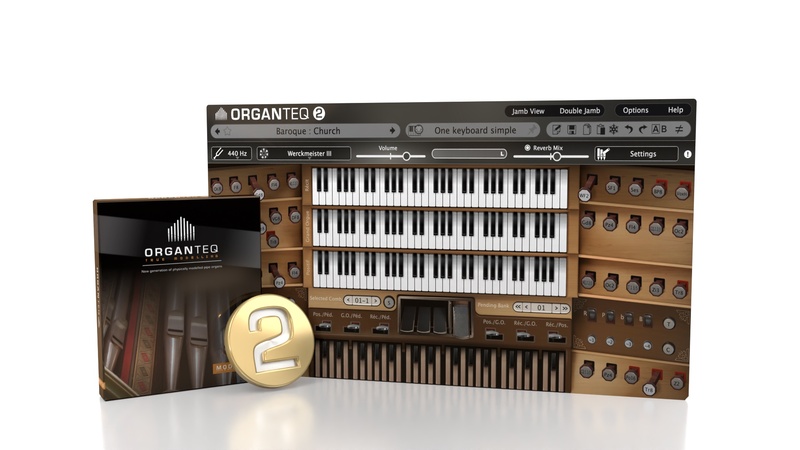
Organteq: physically modelled pipe organs
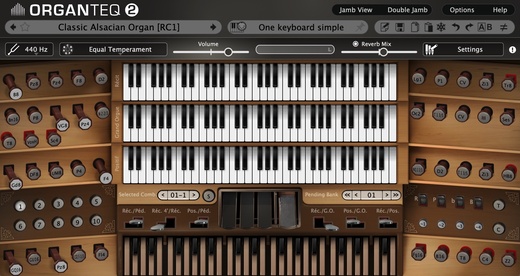
Organteq is a physically modelled pipe organ for MacOS, Windows and Linux (x86). It includes a standalone version and 64-bit plug-ins for VST, AAX, and AudioUnits hosts.
The organ sound is generated in real time from scratch, reproducing the typical and variable pipe attack transients “chiff” as well as the 3D configuration, where pipes are located in space according to their keyboards. Even the action noises from keys, stops and couplers are modelled. All this makes the instrument livelier than sample based variants, bringing more realistic variability in attack and sustain.
By omitting usage of samples, the file size is just a tiny fraction of that offered by other virtual organs, perfect for use on any modern laptop. Installation is simple and fast.
Organteq features highlight
- Physically modelled organ
- Real time sound generation
- Three five-octave keyboards and a thirty-two note pedal keyboard
- Ten assignable stops per keyboard
- Pipe-per-pipe adjustable parameters for each stop
- Adjustable tremulant
- Adjustable expression pedal
- Adjustable crescendo pedal
- Adjustable keyboard couplers
- Adjustable combinations ("presets" for stops)
- Customizable reverb, from dry to wet sound
- Adjustable diapason and temperament
- Fine-tuning note-per-note
- MIDI Learn feature for assigning external MIDI devices
- MIDI Mapping with keyboard-split feature
- Works great on any modern laptop
- Fast loading - just 20 MB in size
They talk about Organteq



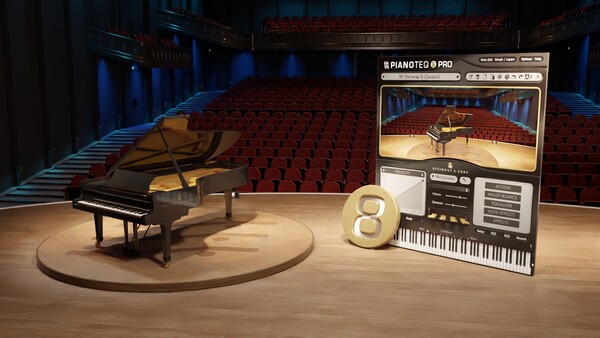
Pianoteq 8 released
Pianoteq 8 introduces a new exciting category of physically modelled instruments: the nylon Classical Guitar.
Many instruments have been carefully revoiced in order to increase authenticity and playability. A fresh streamlined user interface displays the instruments and environments for a clear presentation of selected presets.
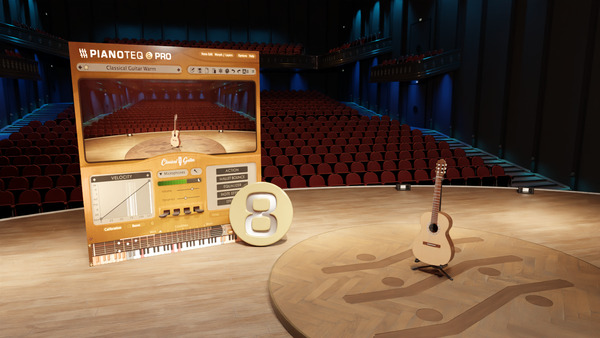
Classical Guitar instrument pack
The nylon Classical Concert Guitar for Pianoteq introduces a new exciting category of physically modelled instruments, with emulated gestures and natural instrument noises for breathtaking realism. The instrument UI is designed so that you do not have to be a guitarist to use it. Various tweaked presets are offered, ranging from a 12-string acoustic guitar to a Greek bouzouki or even an electric guitar. You really need to hear it to believe it!